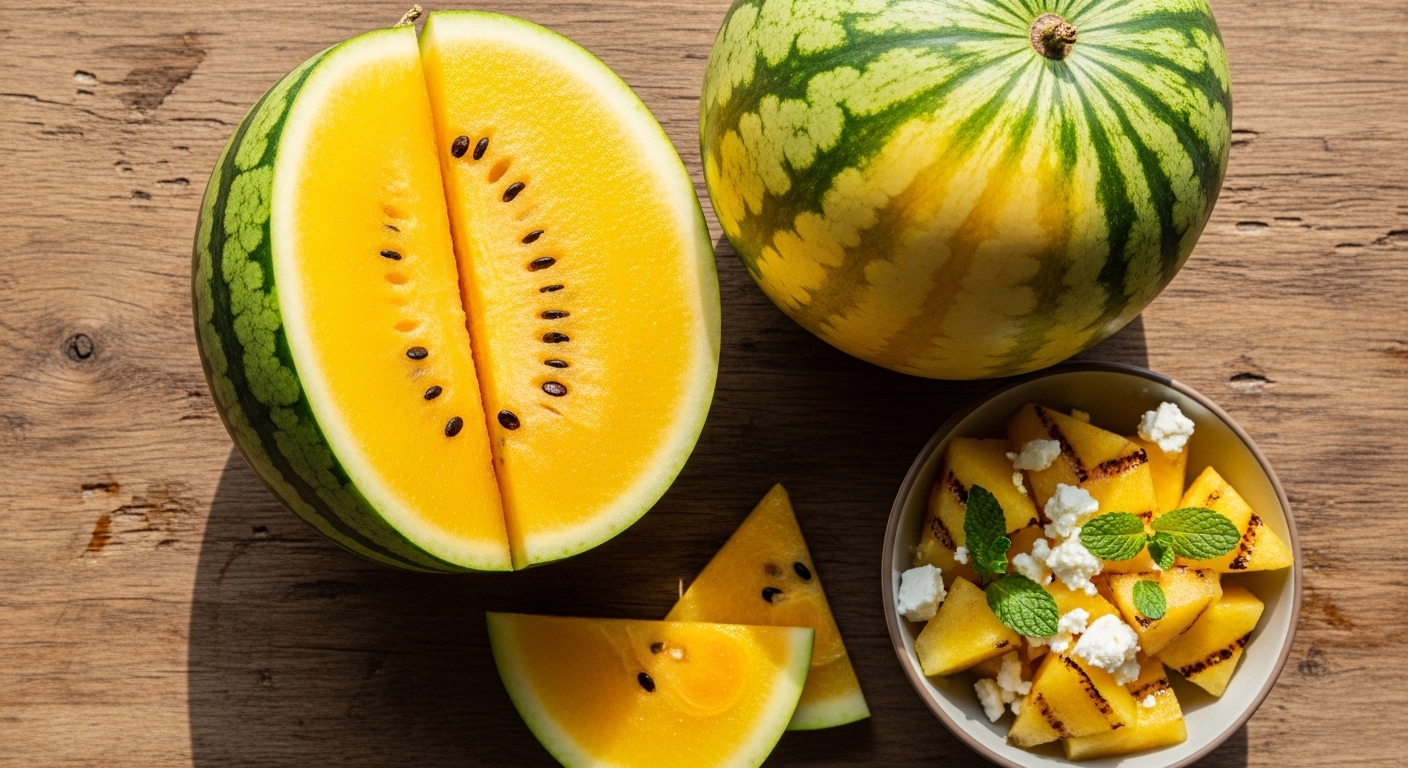
Yellow watermelon isn’t some lab-grown novelty or a genetic trick. You’ll find it at farmers’ markets, specialty grocers, and increasingly in backyard gardens. Its golden interior catches your eye immediately, but one bite tells the real story. This fruit tastes sweeter, softer, and somehow more honey-like than the red watermelon you grew up eating.
Most people walk right past yellow watermelon without a second glance. They assume it’s unripe or somehow inferior because red equals ripe in their minds. That assumption costs them one of summer’s best-kept secrets. The truth is, yellow watermelon has been around for thousands of years. Ancient African farmers cultivated these golden-fleshed varieties long before red watermelons dominated global markets.
So why don’t you see yellow watermelon everywhere? Simple economics. Red watermelons grow faster, yield more fruit per acre, and ship better across long distances. Yellow varieties produce less fruit, take more attention, and bruise easier. Grocery chains choose volume and durability over flavor every time. But when you find a good yellow watermelon, you’ll understand why chefs and food lovers pay a premium for them.
The Natural Origins of Golden Fleshed Watermelon
Yellow watermelon isn’t genetically modified. Farmers didn’t inject anything strange into these fruits to change their color. The golden hue comes from a natural mutation that reduces lycopene, the same compound that makes tomatoes red and watermelons pink. Instead of lycopene, yellow varieties accumulate beta-carotene, the same antioxidant that gives carrots and sweet potatoes their orange-yellow color.
This mutation occurs spontaneously in nature. Wild watermelons in Africa show tremendous variety in flesh color. Some produce white flesh, others pale yellow, and a few develop deep red interiors. Early farmers noticed yellow-fleshed watermelons growing alongside red ones and saved seeds from the sweetest ones. Over generations, they developed stable yellow varieties that produced consistently golden fruit.
Several specific yellow watermelon varieties exist today. ‘Yellow Crimson’ looks like a standard red watermelon on the outside but opens to bright yellow inside. ‘Desert King’ produces large yellow watermelons that thrive in hot, dry conditions. ‘Mountain Sweet Yellow’ offers exceptional sweetness and cold tolerance for northern growers. Each variety brings slightly different flavor notes, from honeyed to citrusy to almost floral.
Why Yellow Watermelon Tastes Sweeter Than Red
Put a slice of yellow watermelon next to a red slice from the same farmer’s market, and you’ll notice the difference immediately. Yellow watermelon typically registers between 10 and 12 on the Brix scale, which measures sugar content. Red watermelon averages 8 to 10. That difference translates directly to your taste buds.
The chemistry explains what your mouth already knows. Yellow watermelon contains higher concentrations of fructose and sucrose, the sweetest natural sugars. Red watermelon leans heavier on glucose, which tastes less sweet by comparison. Your tongue picks up this difference within seconds. Yellow watermelon hits your palate with a clean, honey-like sweetness that doesn’t need salt or lime to brighten it up.
But sweetness alone doesn’t tell the whole story. Yellow watermelon also contains fewer of the compounds that create that grassy, slightly vegetal note sometimes found in red watermelon. Without those compounds competing for attention, the sweetness comes through cleaner. Many people describe yellow watermelon as tasting like honey mixed with a hint of apricot or pear. Red watermelon tastes more like a classic, refreshing summer melon with subtle cucumber undertones.
Temperature affects how you perceive these differences. Cold yellow watermelon tastes dramatically sweeter than room temperature. The sugar concentration remains the same, but cold suppresses bitter and vegetal flavor receptors on your tongue while leaving sweet receptors fully active. Always serve yellow watermelon well-chilled for the best experience.
Nutritional Profile What Makes the Yellow Color Matter
That golden color isn’t just pretty to look at. Beta-carotene gives yellow watermelon its hue and delivers real health benefits. Your body converts beta-carotene into vitamin A, which supports eye health, immune function, and skin cell regeneration. A two-cup serving of yellow watermelon provides roughly 30 percent of your daily vitamin A needs.
Red watermelon beats yellow on lycopene content. Lycopene is a powerful antioxidant linked to heart health and reduced cancer risk. But yellow watermelon wins on beta-carotene by a wide margin. You don’t have to choose between them. Eating both colors gives you a broader range of antioxidants than sticking with just red.
Yellow watermelon also contains decent amounts of vitamin C, potassium, and magnesium. The high water content, about 92 percent, makes it excellent for hydration on hot days. Athletes sometimes reach for yellow watermelon over sports drinks because it provides water, electrolytes, and sugar in a natural package without artificial colors or preservatives.
The calorie count stays low regardless of color. A cup of diced yellow watermelon contains roughly 46 calories. That’s fewer calories than an apple or banana, with more volume to fill you up. The natural sugars provide quick energy without the crash you get from processed sweets. For anyone watching their sugar intake, portion control still matters, but yellow watermelon offers one of the better sweet treats available.
How to Pick a Perfect Yellow Watermelon at the Store
Choosing a good yellow watermelon takes practice because the exterior gives fewer clues than a red watermelon. The stripes, shape, and rind thickness vary across yellow varieties. Some look identical to red watermelons from the outside. Others have lighter green stripes or a more rounded shape. You have to rely on the same techniques used by produce experts.
Start with weight. A ripe watermelon feels heavy for its size. That weight means high water content and dense, sweet flesh. Pick up several melons of similar size and choose the heaviest one. This rule applies to yellow and red watermelons equally.
Check the field spot. Every watermelon has a pale yellow or cream-colored patch where it rested on the ground while ripening. A deep, buttery yellow field spot indicates a melon that ripened fully on the vine. White or pale green field spots mean the melon was picked too early and will taste bland. This is the single most reliable ripeness indicator for any watermelon.
Look for webbing or scarring on the rind. Those brown, web-like lines show where bees pollinated the flowers multiple times. More pollination leads to sweeter, more flavorful fruit. Ugly watermelons with heavy webbing often taste better than perfect-looking ones with smooth, unmarked rinds.
Tap the watermelon. A ripe melon produces a deep, hollow sound rather than a high-pitched or flat thud. This technique takes practice, but experienced shoppers use it alongside the other methods. Hold the melon to your ear and tap firmly with your knuckles. A ripe yellow watermelon sounds almost like a drum.
Growing Yellow Watermelon in Your Own Garden

Home gardeners have an advantage over grocery shoppers when it comes to yellow watermelon. You can grow varieties that never appear in stores because they bruise too easily or don’t ship well. The taste difference between homegrown and store-bought yellow watermelon is dramatic enough to justify the garden space.
Yellow watermelon needs the same growing conditions as red varieties. Full sun, rich soil, consistent water, and a long, warm season. Plant seeds directly in the ground after soil temperature reaches 70 degrees Fahrenheit. Start indoors in cooler climates, transplanting carefully to avoid disturbing the roots. Space plants three to four feet apart in rows six feet apart. These vines spread aggressively.
Water deeply once or twice per week rather than shallow daily watering. Deep watering encourages roots to grow downward, making plants more drought-tolerant. Keep water off the leaves to prevent fungal diseases. Drip irrigation or soaker hoses work best. Mulch around plants to retain moisture and suppress weeds.
Yellow watermelon takes 70 to 90 days from planting to harvest, depending on the variety. ‘Yellow Baby’ matures faster at around 70 days, making it a good choice for northern gardens with shorter summers. ‘Desert King’ needs 90 days but produces larger fruits that handle heat better. Check seed packets for specific timing.
Harvesting at the right moment matters more for yellow watermelon than red. The color change from white to yellow happens gradually. Wait until the tendril nearest the fruit turns brown and dries up. The field spot should be deep yellow. The rind should resist fingernail pressure. Pick too early and the flesh will be pale and bland. Pick too late and the texture becomes mealy.
Cooking and Eating Yellow Watermelon: Beyond Basic Slices
Most people eat yellow watermelon the same way they eat red: sliced cold on a summer afternoon. That’s a perfectly good use. But yellow watermelon’s unique flavor profile makes it exceptional in recipes where red watermelon feels out of place. The honeyed sweetness pairs with ingredients that clash with red watermelon’s more vegetal notes.
Grilled yellow watermelon transforms completely. High heat caramelizes the natural sugars and adds smoky complexity. Cut one-inch thick slabs, pat them dry, brush with olive oil, and grill two minutes per side. Serve with crumbled feta, fresh mint, and a drizzle of balsamic glaze. The combination sounds odd but works brilliantly. Red watermelon turns mushy and loses its structure on the grill. Yellow watermelon holds up better.
Yellow watermelon gazpacho makes a stunning summer starter. Blend yellow watermelon with cucumber, yellow bell pepper, shallot, sherry vinegar, and a touch of jalapeño. Chill for two hours and serve cold. The golden color looks beautiful in clear glasses, and the sweet-spicy balance wakes up tired palates. Red watermelon gazpacho exists, but it tastes heavier and less bright.
Mix yellow watermelon into fruit salads for visual contrast. The golden cubes stand out against red berries, green grapes, and purple plums. The flavor adds honeyed sweetness without making everything taste like watermelon. Yellow watermelon also works in smoothies with coconut milk, mango, and lime. The beta-carotene blends into a beautiful orange-gold color that signals healthiness before you take the first sip.
For savory applications, pair yellow watermelon with salty and acidic ingredients. Prosciutto and yellow water melon skewers taste cleaner than the classic melon-prosciutto combination because the sweetness doesn’t compete with the meat’s saltiness. Lime juice and chili powder on yellow watermelon brings out citrus notes you never noticed before. A sprinkle of flaky salt on a cold slice makes the sweetness pop like magic.
Storage Tips to Keep Yellow Watermelon Fresh
Whole, uncut yellow watermelon keeps for one to two weeks at room temperature. The flavor actually improves during the first few days after harvest as starches convert to sugars. Store it in a cool, dark place away from direct sunlight. A basement or pantry works better than a hot kitchen counter.
Once you cut a yellow watermelon, the clock starts ticking. Refrigerate cut pieces in an airtight container. They stay fresh for three to five days. Beyond that, the texture becomes mushy and the flavor fades. Some people freeze yellow water melon cubes for smoothies, but thawed watermelon loses its crisp texture completely. Only freeze if you plan to blend it.
Don’t store yellow watermelon next to apples, bananas, or tomatoes. These fruits release ethylene gas, which speeds ripening and leads to mealy, overripe melon. Keep watermelon in a separate drawer or on a different shelf from ethylene producers.
Cut only what you plan to eat within a few days. A whole yellow water melon stays fresh much longer than cut pieces. If you need only half, wrap the cut face tightly in plastic wrap and refrigerate. The exposed flesh will still degrade faster than an uncut melon, but proper wrapping buys you an extra day or two.
Comparing Yellow Watermelon to Other Melon Varieties
Yellow watermelon sits in a unique position among melons. It has the texture and hydration of red watermelon but the sweetness profile of honeydew or cantaloupe. That combination doesn’t exist in any other common melon variety.
Honeydew melon shares yellow water melon’s pale green to white flesh but tastes completely different. Honeydew offers a mild, almost floral sweetness without the juicy, crisp texture of watermelon. The two melons complement each other in fruit salads but don’t substitute for one another in recipes. Yellow water melon brings crunch and juice where honeydew brings softness and subtlety.
Cantaloupe has more beta-carotene than yellow water melon, hence its deep orange color. The flavor leans musky and rich rather than honeyed and clean. Cantaloupe works better in breakfast applications with yogurt and granola. Yellow watermelon shines in refreshing, hydrating dishes where you want brightness without heaviness.
Red watermelon remains the closest relative, obviously. The texture, growing requirements, and basic structure match exactly. The only differences lie in flavor profile and antioxidant content. Red watermelon tastes more classic and refreshing. Yellow water melon tastes sweeter and more complex. Neither one replaces the other. Smart eaters buy both colors depending on what they’re making.
Conclusion
Yellow watermelon deserves a spot alongside red watermelon, cantaloupe, and honeydew in your seasonal fruit rotation. It brings something different to the table: honeyed sweetness, golden color, and versatility across sweet and savory dishes. You don’t have to choose one color over the other. Eat red watermelon when you want classic refreshment. Reach for yellow when you want something sweeter and more complex.
The price difference matters less when you consider how little yellow watermelon you actually need. Because it tastes sweeter, you eat less of it to satisfy a sugar craving. One cup of diced yellow water melon satisfies where two cups of red might leave you wanting more. Buy it as a treat, not as your everyday snacking melon.
Look for yellow water melon at farmers’ markets from July through September. That’s the peak season for most varieties. Grocery stores carry it year-round in some regions, but off-season yellow water melon comes from distant farms and tastes noticeably inferior. Summer is the time to enjoy this golden fruit at its absolute best.
Frequently Asked Questions
1. Is yellow watermelon safe to eat raw like red watermelon?
Yes, yellow watermelon is completely safe to eat raw. The yellow color comes from natural beta-carotene, not any artificial or harmful compound. You can eat yellow watermelon sliced, cubed, or scooped straight from the rind without any cooking or preparation beyond washing the exterior.
2. Why does yellow watermelon cost more than red watermelon at stores?
Yellow watermelon costs more because farmers produce less of it per acre. Yellow varieties yield fewer fruits per plant and the fruits tend to be smaller than standard red watermelons. The supply chain for yellow watermelon is also less efficient since fewer farms grow it and demand remains lower, so stores can’t buy in massive volume to reduce prices.
3. Can you save seeds from a yellow watermelon to grow your own?
You can save seeds from any yellow watermelon, but the results won’t be predictable unless the watermelon came from an open-pollinated heirloom variety. Hybrid yellow water melons produce seeds that grow into plants with mixed traits. Some fruits will be yellow, some red, some pale and bland. For reliable results, buy fresh seeds from a reputable seed company.
4. Does yellow watermelon have less sugar than red watermelon?
No, yellow watermelon typically contains more sugar than red watermelon. Most yellow varieties measure 10 to 12 percent sugar content compared to 8 to 10 percent in red varieties. The higher sugar content combined with fewer competing flavors makes yellow watermelon taste noticeably sweeter.
5. How can you tell if a yellow watermelon is ripe without cutting it open?
Use the same ripeness indicators as red watermelon. Look for a deep yellow field spot where the melon rested on the ground. Check for dried, brown tendrils near the stem. Tap the melon and listen for a deep, hollow sound. Feel the weight; ripe melons feel heavy for their size. These methods work for all watermelon colors.
6. Can dogs eat yellow watermelon?
Yes, dogs can eat yellow watermelon in moderation. Remove all seeds first, as they can cause intestinal blockage in small dogs. The flesh provides hydration, vitamins, and natural sweetness without harmful compounds. Start with a small piece to ensure your dog tolerates it well. Never feed dogs watermelon rind, which causes digestive upset.