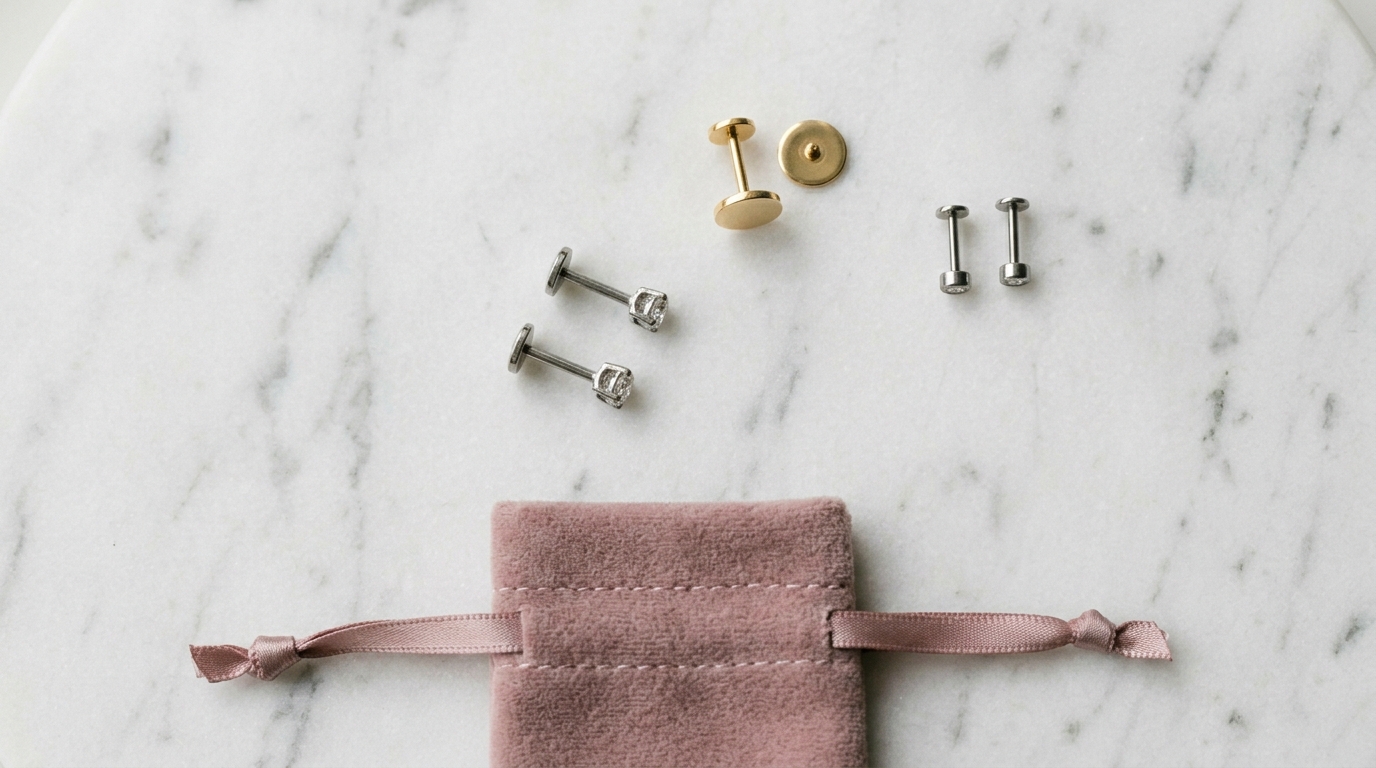
Flat back earrings have changed the way people think about everyday jewelry. Unlike traditional earrings with sharp, protruding posts, flat back earrings sit flush against the skin, offering unmatched comfort for sleeping, exercising, and wearing for long hours. For anyone who has ever woken up with a painful poke behind the ear or struggled with irritated piercings, this innovative design feels like a lifesaver.
You will find flat back earrings in various styles, from tiny diamond studs to delicate gemstone options and minimalist gold pieces. They work perfectly for helix piercings, lobe piercings, and even tragus or conch placements. What makes them truly special? The lack of a sharp point means zero irritation. You can wear them through airport security without worry, nap on the couch without discomfort, and even keep them in during contact sports or yoga sessions. More people switch to flat back earrings every day, and once you try them, you rarely go back to traditional butterfly backs.
Why Flat Back Earrings Beat Traditional Butterfly Backs
Traditional earring backs come with a hidden danger that sharp, pointy post. After a few hours, that little metal tip starts digging into the soft skin behind your ear. Butterfly backs also trap moisture, bacteria, and hair products, leading to unpleasant odors or even infections. Flat back earrings eliminate these problems entirely.
The flat back design spreads pressure evenly across the skin. You won’t find a single sharp edge or protruding point. For people with sensitive ears or metal allergies, flat back earrings in titanium or surgical steel reduce flare-ups significantly. The smooth surface also makes cleaning easier—just a quick wipe, and you remove trapped dirt or oil. Many professional piercers now recommend flat back labrets for initial piercings because they promote faster healing and less swelling.
Consider your morning routine. With standard earrings, you might remove them before showering or sleeping. With flat back earrings, you leave them in for days or weeks at a time. You wash your hair, sleep on your side, and wear over-ear headphones without once feeling that infamous post poke. That convenience alone drives thousands of people to make the switch.
The Best Materials for Flat Back Earrings And What to Avoid
Not all flat back earrings perform equally. The material determines comfort, durability, and skin reaction. Here are the top choices you should look for.
Implant-grade titanium leads the pack. This metal contains no nickel, resists corrosion, and feels incredibly lightweight. Surgeons use titanium for bone screws and joint replacements, so you know it’s safe for long-term wear inside the body. Titanium flat back earrings never tarnish or turn green, and they work for even the most reactive skin types.
14k or 18k solid gold comes second. Gold offers a classic look and stays naturally hypoallergenic when you choose pure gold without nickel alloys. Yellow gold, rose gold, and white gold all work well. Avoid gold-plated or gold-filled options—the thin layer wears off within months, exposing cheaper metals underneath.
Surgical steel provides a budget-friendly alternative. Look for ASTM F-138 compliant steel, which indicates high quality and low nickel content. Cheap steel from unknown brands often contains too much nickel, leading to itchy, red skin after a few days of wear.
What should you avoid? Stay away from brass, copper, or mystery metal blends. These materials react with skin oils and sweat, turning your ear green and causing irritation. Also skip plastic flat back earrings—they trap moisture and harbor bacteria despite feeling lightweight.
How to Choose the Right Length for Flat Back Earrings
Length matters more than you think. Flat back earrings come with posts ranging from 4mm to 10mm or longer. Choosing the wrong length leads to pinching or excessive looseness.
For standard lobe piercings, a 6mm or 7mm post works perfectly. This length sits flush without squeezing the earlobe. If your lobes feel thick or you have multiple stacked piercings, go up to 8mm. For cartilage piercings like helix or conch, start with 6mm to 7mm. Swollen or new piercings need 8mm or 9mm to accommodate inflammation during healing.
Here is a simple way to measure your ideal length. Take a standard earring with a butterfly back. Push it all the way forward until it touches your ear. Look at how much post sticks out behind the butterfly—that extra space determines your needed length. If 2mm sticks out, choose a 6mm post. If 4mm sticks out, choose an 8mm post.
When in doubt, buy a multi-length starter pack. Many flat back earring brands sell sample sets with 5mm, 6mm, 7mm, and 8mm posts. You test each one, find your perfect fit, and then invest in nicer pieces. A properly fitted flat back earring should feel snug but not tight, with no gap between the back and your skin.
Flat Back Earrings for Sleeping A Game Changer for Side Sleepers
Side sleepers understand the struggle. You drift off comfortably, then roll over onto your side. The standard earring post jabs into your neck or skull. You wake up, remove the earring, and lose it on the nightstand. Repeat this cycle nightly, and eventually you stop wearing earrings altogether.
Flat back earrings solve this overnight. The smooth, rounded back feels like nothing against your pillow. You can press your ear into a memory foam pillow, rest your head on your hand while reading in bed, or cuddle with a partner without any metal digging into skin. Many people report sleeping better simply because they stop waking up from earring pain.
Parents of young children also love flat back earrings. Toddlers who wear standard earrings often yank them out during sleep or fuss about the discomfort. Flat back designs remove that sensory annoyance. Kids sleep through the night, and parents avoid middle-of-the-night earring emergencies.
For travel, flat back earrings become indispensable. You sleep on planes, trains, and hotel pillows without worrying about lost earring backs or poked necks. One frequent traveler told me she switched her entire earring collection to flat backs after a red-eye flight left her with a bloody spot behind her ear from a traditional post. Now she never travels without them.
How to Put In and Remove Flat Back Earrings Without Frustration

New users often struggle with flat back earring insertion. The technique differs from standard earrings, but once you learn it, the process takes five seconds.
Start by washing your hands thoroughly. Hold the decorative front piece with one hand. With your other hand, unscrew or pull off the flat back cap (depending on the brand’s mechanism). Insert the post through the front of your piercing hole. Here comes the tricky part reach behind your ear and guide the flat back onto the post. Most people find it easier to use a mirror or ask for help the first few times.
For threaded flat back earrings, you screw the back onto the post. Turn clockwise until it feels snug do not overtighten. For threadless flat back earrings, you push the back onto the post until you hear a small click. Threadless designs use tension instead of threads, which some people prefer for easier one-handed removal.
Removal follows the reverse process. Unscrew or pull off the back. Slide the post out from the front. Clean both pieces with mild soap and water before reinserting. Never force a flat back earring if it resists double check that you’re turning in the correct direction or that no dried skin or debris blocks the post.
Pro tip: Buy a small earring tweezer or hemostat tool. These medical-grade tweezers grip tiny flat backs securely, making insertion in hard-to-see piercings like conch or daith much easier. You can find these tools online for under ten dollars.
Styling Flat Back Earrings From Minimalist to Statement Looks
Flat back earrings suit every aesthetic. For minimalists, tiny gold or silver discs create a clean, modern look. You can wear them in multiple piercings without looking cluttered. Many professionals choose flat back studs for office environments because they appear polished without drawing too much attention.
Gemstone lovers have plenty of options. Flat back earrings with small diamonds, sapphires, or opals add subtle sparkle. Because the back sits flush, heavier gemstones stay stable without drooping forward. This makes flat back designs ideal for valuable stones—you won’t lose an expensive diamond stud because the back came loose.
For helix and upper cartilage piercings, flat back earrings come in decorative shapes like stars, moons, or flowers. These add personality without the snag risk of dangling chains or hoops. You can curate an entire “earscape” of flat back jewelry, mixing metals and shapes across multiple piercings for a trendy stacked look.
Men also embrace flat back earrings more than ever. Simple black studs, matte titanium discs, or small geometric shapes offer masculine styling without the hassle of traditional earrings. Men who exercise or play sports particularly love flat backs because they don’t catch on gym equipment or wrestling mats.
Caring for Your Flat Back Earrings to Last a Lifetime
Proper care keeps flat back earrings looking new for years. Clean them weekly even if you never remove them. Use a soft toothbrush and mild dish soap to gently scrub the front and back. Pay special attention to the area where the post meets the flat back skin oils and dead skin cells accumulate there.
Avoid harsh chemicals like chlorine bleach, rubbing alcohol, or acetone. These damage metal finishes and irritate piercings. Also remove flat back earrings before swimming in pools or hot tubs, as chlorine degrades some metals over time. Saltwater from the ocean poses less risk, but rinse your earrings with fresh water afterward.
Store flat back earrings properly when you do remove them. A small pill organizer works perfectly each compartment holds one pair, keeping posts from scratching decorative fronts. Never toss them loose into a jewelry box where chains or other earrings can bend the posts.
If your flat back earrings develop a dull appearance, use a jewelry polishing cloth. These treated cloths remove tarnish from gold and silver without abrasive chemicals. For titanium or surgical steel, a microfiber cloth restores shine instantly. Avoid liquid dips or ultrasonic cleaners—they damage threadless tension mechanisms over time.
Flat Back Earrings for Healing New Piercings
Professional piercers recommend flat back labrets for almost all new piercings. Here is why. Fresh piercings swell unpredictably. A standard earring with a butterfly back has no room for swelling, leading to embedded earrings that require medical removal. Flat back earrings come in longer posts (8mm to 10mm) that accommodate swelling while remaining secure.
The smooth surface also prevents crusties and discharge from building up around the back. With butterfly backs, dried fluid traps between the ear and the back, creating a breeding ground for bacteria. Flat backs leave no crevices for gunk to hide. You simply spray saline solution, let it soak, and gently wipe away debris.
Healing times vary by piercing location. Lobes take 6 to 8 weeks. Helix piercings take 6 to 9 months. Conch and daith piercings take 9 to 12 months. During this entire period, your flat back earrings should remain in place 24/7. Only remove them for professional downsizing by your piercer. Once fully healed, you can switch to shorter posts for a more comfortable fit.
Do not attempt to change your own flat back earrings during healing. Let your piercer handle the first post change. They have sterilized tools and can assess whether your piercing healed enough for shorter jewelry. Changing too early risks introducing bacteria or tearing delicate healing tissue.
Where to Buy High Quality Flat Back Earrings
Not all retailers sell genuine flat back earrings. Many cheap brands label standard earrings with “flat back” when they actually have slightly rounded but still pointed posts. Look for these trusted brands for guaranteed quality.
BodyArtForms carries a huge selection of titanium and gold flat back labrets. They include detailed post length measurements and material certifications. Lulus Body Jewelry specializes in threadless flat back earrings with interchangeable decorative fronts—you buy one post and swap tops whenever you want a new look. Maria Tash offers luxury flat back earrings in solid gold and diamonds, though prices run high. Etsy has many small makers selling custom flat back earrings, but read reviews carefully for quality complaints.
Avoid Amazon unless you stick to well-reviewed brands like Invictus or Neometal. Cheap no-name sellers often use mystery metals labeled “stainless steel” that contain high nickel levels. Also avoid fashion jewelry chains like Claire’s or Icing—their flat back earrings use low-quality materials unsafe for long-term wear.
Check return policies before buying. Flat back earrings fall under body jewelry regulations, so many stores do not accept returns for hygiene reasons. Some brands offer sizing exchange programs—you pay shipping, and they swap your posts for different lengths. This saves money while you find your perfect fit.
Conclusion
Making the switch to flat back earrings transforms your daily experience with jewelry. You stop adjusting your earrings throughout meetings. You nap on the couch without regret. You hug friends and family without pulling away from a sudden poke. Small changes like these add up to real improvements in how you feel each day.
Start with one pair in a versatile metal like titanium or yellow gold. Wear them for a full week without removing them. Notice how your ears feel at the end of the day—no redness, no tenderness, no urge to take them out the second you get home. That comfort becomes addictive. Within months, you will replace every pair of traditional earrings with flat back alternatives.
Frequently Asked Questions
1. Can you sleep comfortably in flat back earrings?
Yes, absolutely. The flat back design eliminates any sharp protrusions that poke your neck or skull during sleep. Many people forget they are even wearing earrings because the smooth back feels like nothing against the pillow. Side sleepers especially benefit from this design.
2. Are flat back earrings safe for sensitive ears?
Flat back earrings made from implant-grade titanium or 14k solid gold are the safest option for sensitive ears. These materials contain no nickel, which causes most allergic reactions. The smooth back also reduces friction and moisture buildup, two common triggers for irritation.
3. How do you put flat back earrings in by yourself?
Use a mirror or your phone’s front camera to see behind your ear. Hold the decorative front piece with one hand. Insert the post through the front of your piercing. With your other hand, guide the flat back onto the post until it clicks (threadless) or screws on (threaded). Practice makes perfect—most people master it within a few tries.
4. Do flat back earrings fall out easily?
No. Quality flat back earrings stay securely in place until you intentionally remove them. Threadless designs use tension that requires a firm pull to open. Threaded designs screw on and will not loosen accidentally. Cheap flat backs with poor threading can fall out, which is why buying from reputable brands matters.
5. Can you wear flat back earrings in healed piercings?
Yes, flat back earrings work beautifully in both new and healed piercings. In healed piercings, you can choose shorter posts for an even more snug fit. Many people with 10+ year old piercings switch to flat backs and never go back to traditional earrings.
6. How often should you clean flat back earrings?
Clean them weekly if you wear them continuously. Remove the earring, wash both pieces with mild soap and warm water, and dry thoroughly before reinserting. If you swim, exercise heavily, or use hair products daily, clean them every 3 to 4 days to prevent buildup.
7. What length post should you buy for flat back earrings?
Lobe piercings need 6mm to 7mm posts. Cartilage piercings need 6mm to 8mm depending on swelling. New piercings need 8mm to 10mm for healing room. Buy a multi-length sample pack to test your ideal fit before investing in expensive jewelry.


