Droven.io machine learning trends are rapidly redefining how modern AI systems learn, adapt, and scale across industries. droven.io machine learning trends have become a focal point for developers, researchers, and businesses looking to understand how intelligent systems are evolving beyond traditional models into more autonomous, data-driven ecosystems. In today’s digital landscape, machine learning is no longer just about predictions; it is about continuous learning, real-time adaptation, and context-aware decision-making that feels almost human in execution.
What makes this shift even more compelling is how quickly these advancements are being adopted in real-world systems. From smarter automation pipelines to adaptive recommendation engines, droven.io machine learning trends highlight a transformation that is both technical and practical. The focus is no longer limited to model accuracy alone but extends to efficiency, interpretability, scalability, and ethical alignment. This evolution is quietly powering everything from personalized digital experiences to complex enterprise decision systems.
As we explore deeper into these trends, it becomes clear that machine learning is entering a phase where intelligence is distributed, constantly evolving, and increasingly embedded into everyday tools and platforms.
The rise of adaptive intelligence in modern machine learning systems
One of the most defining aspects of droven.io machine learning trends is the shift toward adaptive intelligence. Traditional machine learning models were largely static after training, requiring periodic retraining to stay relevant. Today’s systems are designed to learn continuously from streaming data, user behavior, and environmental changes.
This adaptive approach allows models to refine themselves in near real-time, improving relevance and reducing the gap between prediction and reality. In practical terms, this means recommendation systems that adjust instantly to user preferences, fraud detection models that react to new attack patterns, and chat-based AI systems that improve responses dynamically.
A major driver behind this transformation is the increased availability of real-time data pipelines and more efficient model architectures. Platforms influenced by droven.io machine learning trends are increasingly leveraging incremental learning techniques, reinforcement learning strategies, and hybrid models that combine symbolic reasoning with neural networks.
For internal linking opportunities, this section naturally connects to topics like real-time AI systems, streaming data processing, and intelligent automation frameworks.
How data centric design is replacing model centric thinking
Another major shift highlighted in droven.io machine learning trends is the transition from model-centric to data-centric AI development. Instead of spending most of the effort refining complex algorithms, teams are now focusing on improving the quality, structure, and representativeness of data.
This approach recognizes a simple truth: even the most advanced model cannot compensate for poor-quality data. As a result, organizations are investing heavily in data labeling strategies, synthetic data generation, and automated data validation systems.
Data-centric machine learning also encourages continuous dataset improvement. Rather than treating data as a static asset, it is now viewed as an evolving resource that must be constantly refined. This shift has significantly improved model performance across industries such as healthcare diagnostics, financial forecasting, and customer behavior analysis.
Within droven.io machine learning trends, this movement is closely tied to automated data pipelines that detect inconsistencies, remove bias, and enrich datasets without human intervention. It represents a foundational change in how AI systems are built and maintained.
The evolution of model architectures toward efficiency and scalability
Model architecture innovation is another core pillar of droven.io machine learning trends. In recent years, there has been a noticeable shift toward lightweight yet highly efficient models that can operate across multiple environments, from cloud infrastructure to edge devices.
Large-scale transformer models have demonstrated impressive capabilities, but they often require significant computational resources. This has led to the rise of optimized architectures that maintain high performance while reducing latency and energy consumption.
Techniques such as model pruning, knowledge distillation, and sparse attention mechanisms are becoming increasingly common. These innovations allow organizations to deploy machine learning systems in resource-constrained environments without sacrificing accuracy.
Another interesting direction is modular AI design, where complex systems are broken into smaller, reusable components. This makes it easier to update individual parts without retraining the entire model, significantly improving scalability and maintainability.
These architectural innovations are central to droven.io machine learning trends and are shaping how future AI systems will be built for both enterprise and consumer applications.
Real world applications driving machine learning innovation
The practical impact of droven.io machine learning trends is most visible in real-world applications. Industries across the board are leveraging advanced machine learning systems to solve complex problems with greater precision and speed.
In finance, predictive models are being used to detect fraudulent transactions in milliseconds while also forecasting market movements with improved accuracy. In healthcare, machine learning is assisting in early disease detection, medical imaging analysis, and personalized treatment recommendations.
E-commerce platforms are using advanced recommendation engines that adapt to user behavior in real time, increasing engagement and conversion rates. Similarly, logistics companies are optimizing supply chains using predictive analytics that anticipate demand fluctuations before they occur.
One of the most transformative applications is in natural language processing, where conversational AI systems are becoming increasingly context-aware and capable of handling nuanced human interactions. This progress is strongly aligned with droven.io machine learning trends, which emphasize adaptability and contextual intelligence.
The role of automation in accelerating machine learning workflows
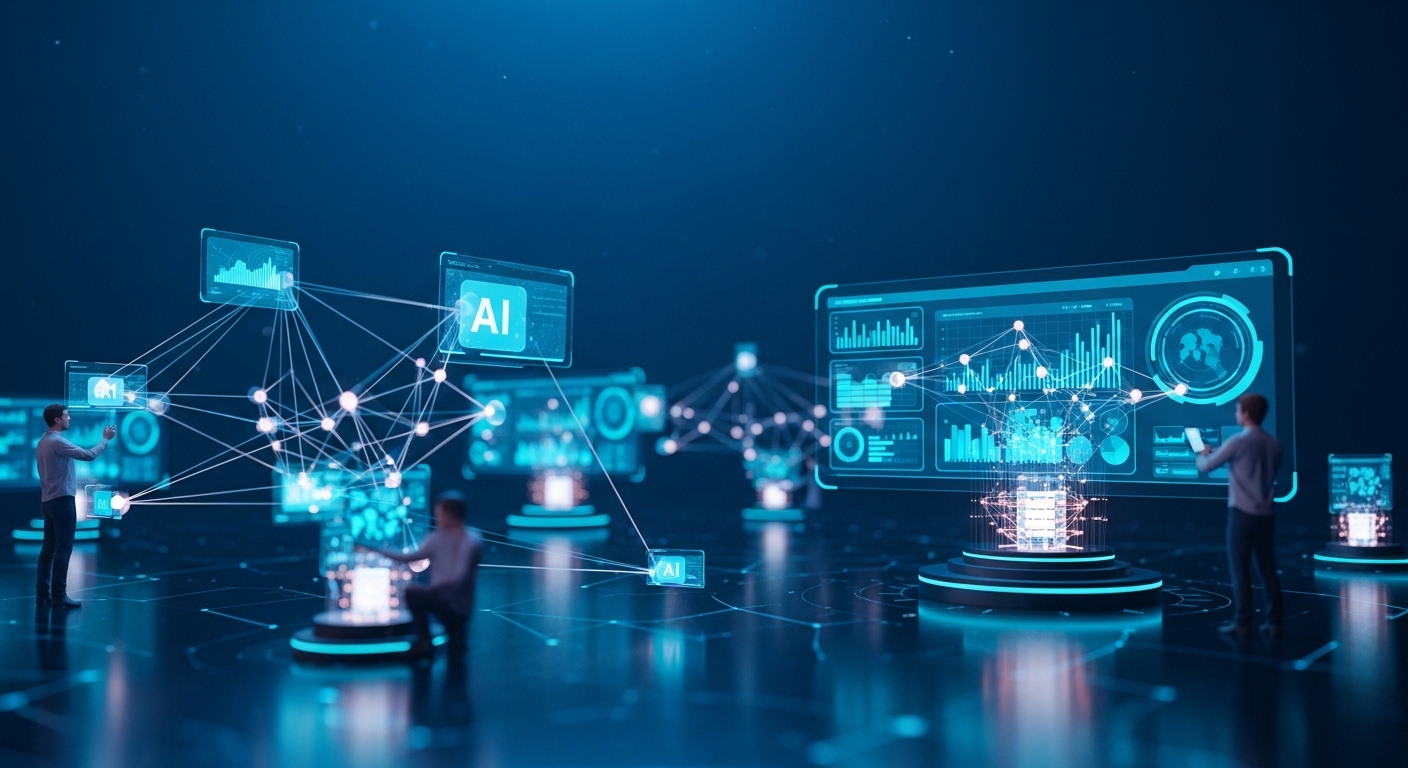
Automation is playing a critical role in shaping droven.io machine learning trends by reducing manual effort and accelerating the entire model development lifecycle. From automated feature engineering to hyperparameter tuning, machine learning pipelines are becoming increasingly self-sufficient.
Automated machine learning systems can now select optimal algorithms, preprocess data, and evaluate models with minimal human intervention. This has significantly lowered the barrier to entry for organizations looking to adopt AI technologies.
Beyond model training, automation is also improving deployment and monitoring processes. Continuous integration and continuous deployment (CI/CD) pipelines for machine learning ensure that models remain updated and perform reliably in production environments.
This automation-driven ecosystem is enabling faster experimentation cycles, allowing teams to test new ideas and iterate more efficiently than ever before.
Ethical considerations and responsible AI development
As droven.io machine learning trends continue to evolve, ethical considerations are becoming increasingly important. The growing influence of AI systems in decision-making processes has raised concerns about bias, transparency, and accountability.
Developers and organizations are now prioritizing explainability in machine learning models to ensure that decisions can be understood and justified. This is particularly important in sensitive domains such as healthcare, finance, and law enforcement.
Bias detection and mitigation strategies are also becoming standard practice. By carefully analyzing training data and model outputs, teams can identify and reduce unintended discrimination in AI systems.
Responsible AI development also includes ensuring data privacy and secure handling of sensitive information. These considerations are shaping the next generation of machine learning frameworks influenced by droven.io machine learning trends.
The growing importance of hybrid intelligence systems
Hybrid intelligence systems, which combine human intelligence with machine learning models, are becoming a key focus in droven.io machine learning trends. These systems are designed to enhance human decision-making rather than replace it entirely.
In many complex scenarios, human intuition and contextual understanding remain essential. Hybrid systems allow humans to guide machine learning models, correct errors, and provide feedback that improves future predictions.
This collaboration between humans and AI is particularly valuable in fields like medical diagnosis, legal analysis, and strategic business planning. It creates a balance between automation and human oversight, resulting in more reliable and trustworthy systems.
Future directions of machine learning innovation
Looking ahead, droven.io machine learning trends point toward even more advanced forms of intelligence. One major direction is the integration of multimodal learning, where systems can process and understand text, images, audio, and video simultaneously.
Another emerging trend is the development of self-improving AI systems that can redesign parts of their own architecture to improve performance. This could lead to more autonomous systems capable of long-term learning without constant human intervention.
Edge AI is also expected to grow significantly, enabling powerful machine learning models to run directly on devices such as smartphones, IoT sensors, and embedded systems. This will reduce latency and improve privacy by minimizing data transfer to centralized servers.
Overall, the future of machine learning is moving toward systems that are more intelligent, efficient, and deeply integrated into everyday life.
Conclusion
The evolution of machine learning is moving far beyond traditional boundaries, and the changes highlighted in droven.io machine learning trends make that shift impossible to ignore. What once depended on static models and manual optimization is now powered by adaptive systems, real-time learning, and deeply data driven intelligence.
As these technologies continue to mature, their impact will extend further into everyday tools, business decisions, and digital experiences. The focus is no longer just on building smarter models, but on creating systems that can learn continuously, respond instantly, and operate responsibly at scale.
Frequently asked questions
1. What are droven.io machine learning trends focused on?
droven.io machine learning trends focus on advancements in adaptive intelligence, data-centric design, scalable architectures, and real-time learning systems. These trends highlight how modern AI is evolving toward more autonomous and efficient behavior across industries.
2. Why is data centric AI important in modern machine learning?
Data-centric AI is important because it improves model performance by focusing on high-quality, well-structured datasets. Instead of only optimizing algorithms, it ensures that the data feeding those algorithms is accurate, diverse, and representative.
3. How do machine learning trends impact real-world industries?
Machine learning trends impact industries by enabling automation, improving decision-making, and enhancing predictive capabilities. Sectors like healthcare, finance, logistics, and e-commerce benefit from faster and more accurate data-driven insights.
4. What role does automation play in machine learning development?
Automation simplifies and accelerates machine learning workflows by handling tasks such as model selection, data preprocessing, and deployment. This reduces manual effort and speeds up experimentation and production cycles.
5. Are ethical concerns important in machine learning development?
Yes, ethical concerns are critical. Issues such as bias, transparency, and data privacy must be addressed to ensure responsible and fair use of machine learning systems in real-world applications.
6. What is the future of machine learning according to current trends?
The future of machine learning includes multimodal AI systems, self-improving models, edge computing integration, and deeper human-AI collaboration, making systems more adaptive and intelligent.